
South Lake Tahoe, CA · Garage Door Service
Why Garage Door Springs Fail in South Lake Tahoe Winters
Houses built 1972-1978 around South Lake Tahoe carry original torsion springs that get brittle in severe cold winters. Here's what fails first and why.
- Repairs & new doors
- Springs & openers
- Serving 4 nearby communities
What Local Conditions Do
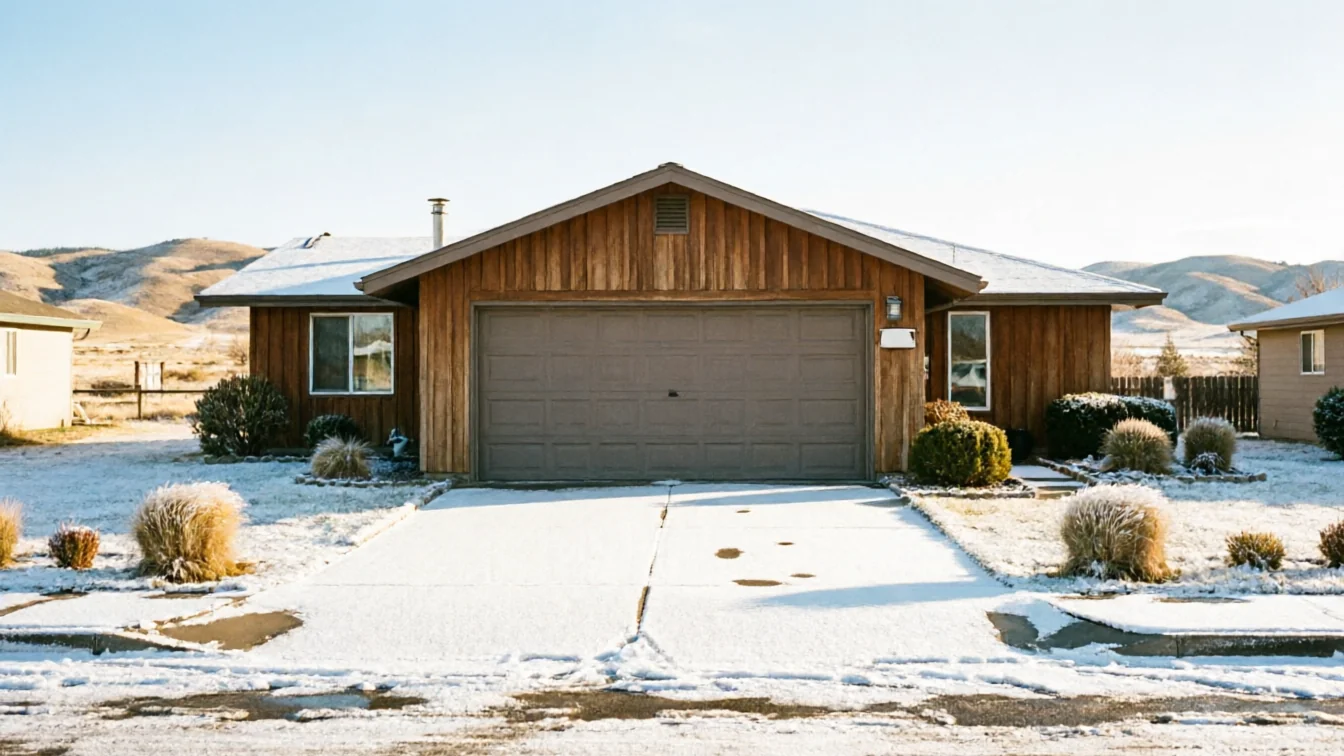
Most of the houses we work on here went up between 1972 and 1978, with the median sitting right at 1973. That's not a random number - it tells you the torsion spring on your door is probably original equipment, cycling up and down for close to fifty years on the same galvanized coil. Across the four older neighborhoods that make up most of this housing stock, the same hardware generation shows up again and again: same spring gauge, same bearing plates, same cable drums.
The climate here sits in the severe cold band, which matters more than people think for a part that's basically a wound-up piece of steel under constant tension. Cold doesn't just make the garage uncomfortable - it changes how the metal behaves. Steel that's already fatigued from decades of winding and unwinding loses flexibility faster as the temperature drops, and the grease packed into the bearings and the spring coil itself stiffens up, adding drag right when the spring has the least give left in it.
Put those two things together - a fifty-year-old spring and a hard freeze - and you get the failure pattern we see most: fine for months, then gone on the coldest morning of the year.
When It Stops Being a DIY Job
A torsion spring under tension is not a part you want to learn about by trial and error, and that's doubly true once the steel is as old as what's on most doors here. On a door built to 1970s hardware standards, the spring, the shaft, and the center bracket have all been doing their job since before a lot of homeowners moved in - rust, fatigue cracks, and worn set screws are common, and none of that is visible until something lets go.
If the spring has already snapped, the door is dead weight on two cables that are also decades old. Don't lift the door, don't cut the cable, don't loosen the winding cones. If it hasn't snapped but you're hearing a loud bang, a grinding noise on the drum, or seeing a visible gap in one coil, that's the time to stop opening and closing the door and get it looked at.
We'll say plainly what we don't do: we don't recommend re-winding a spring that's original to a house this old just to save the cost of replacement. At this age, one side going usually means the other side is close behind, and a mismatched pair is its own problem.
What Is Going On
Here's the mechanism, plainly. A torsion spring stores energy by being wound tight around a shaft. Every time the door opens and closes, that coil flexes - millions of cycles over fifty years for a door built in the early 1970s. Metal fatigue is cumulative: each flex leaves microscopic stress behind, and eventually a crack starts at the weakest point in the coil, often right where the wire overlaps itself.
Cold weather doesn't cause that fatigue, but it's what finishes the job. Steel gets less ductile as it cools, meaning it has less ability to flex before it cracks rather than bends. In a severe cold climate like this one, overnight temperatures can swing the spring from its daytime working range into a brittle range by early morning - which is why so many of these failures happen on the first lift of the day, in the cold garage, before anything's had a chance to warm up.
Add in the stiffened lubricant on the bearing plates and the shaft, and the opener motor is also fighting more resistance than it was built for. That extra load on an opener that's straining against a half-dead spring is its own slower-moving problem, separate from the spring itself but caused by the same conditions.
When Waiting Is Fine
Not everything needs a same-day call. If your door is original to a house from the early-to-mid 1970s and you've noticed it's gotten a little louder or slightly harder to lift by hand over the past year, but it's still opening and closing on command, you can schedule that as routine rather than urgent. A spring that's degrading slowly gives you some warning before it gives you none.
Where we ask people to wait and where we don't is mostly about whether the door still moves safely under its own opener and cables. A visibly bent coil, a cable that's frayed, or a door that's started sagging to one side are not wait-and-see situations. A door that's just a bit noisier in January than it was in July usually is.
Scheduling also depends on where you are. We cover the area out to Meyers, Tahoe, Markleeville, Dollar Point, and Kit Carson, and drive time adds to the wait on days when the cold snaps hard and a lot of these 1970s springs start going at once across the service area. If your door is still functioning, booking a week out instead of pushing for the same afternoon slot is a reasonable call.
Frequently asked questions
Why do garage door springs break more in winter here?
Most springs in this area are original to houses built in the early-to-mid 1970s, so they're already fatigued from decades of cycling. Cold makes the steel less flexible right when it has the least flex left to give, and stiffened grease on the bearings adds extra drag. The combination is why failures cluster on the coldest mornings rather than spreading evenly through the year.
Is it safe to open my garage door by hand after a spring breaks?
No. Once a torsion spring breaks, the door's full weight shifts onto the cables and the opener, neither of which is built to hold it long-term. Leave the door as it sits, don't force the opener, and don't try to loosen the winding cones yourself - the stored tension in a broken or cracked spring can release suddenly.
My door is original to a 1973-built house. Should I replace both springs or just the broken one?
On a door this age, we'd generally replace both. If one side has failed from fifty years of fatigue, the other side has seen the identical number of cycles and the same cold exposure, and it's usually close behind. Replacing just one leaves you with a mismatched pair and a second failure likely within a short stretch.
How fast can you get out to Meyers or Tahoma if my spring goes?
We run the same truck and parts out to Meyers, Tahoma, and the rest of the service area, but drive time does add to the wait compared to calls closer in. On hard-freeze days when several older springs fail at once across the area, that can push same-day slots back - we'll give you a realistic window when you call.
Related garage door services in South Lake Tahoe
More garage door guides
Book garage door service in South Lake Tahoe
Call now or request a quote - tell us what the door is doing and where you are.