
South Lake Tahoe, CA · Garage Door Service
What We Actually Do When We Show Up
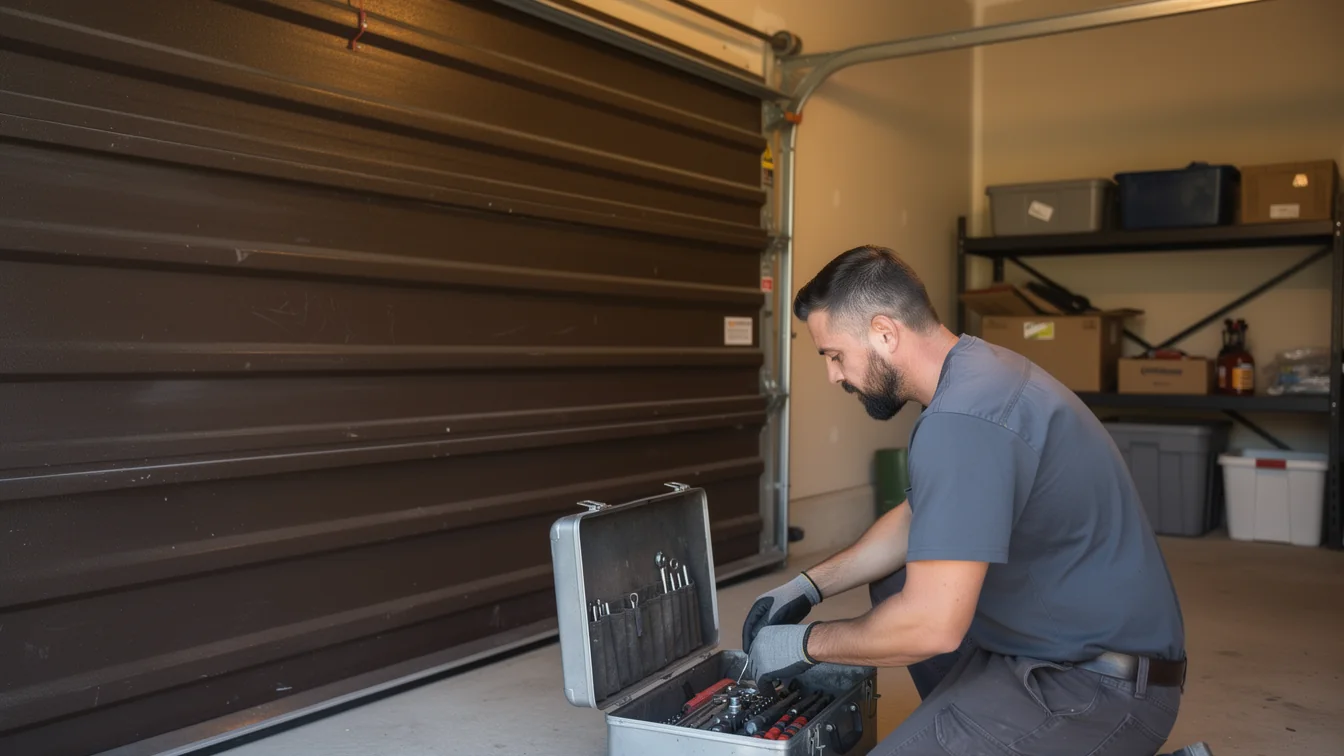
A look at what a garage door service call actually involves in South Lake Tahoe, where 1970s-built housing meets a cold, severe climate band.
- Repairs & new doors
- Springs & openers
- Serving 4 nearby communities
What Local Conditions Do
This is a COLD severe climate band, and that changes what a spring call actually involves. Cold doesn't just stiffen a spring - it changes how fast it fatigues, how the lubricant on the coils behaves, and how the opener's gears handle load on a morning start. A tech checking a door here isn't running the same checklist as one in a mild coastal town. We're looking at how the steel has cycled through repeated freeze and thaw, whether the weatherstripping has shrunk away from the slab, and whether condensation inside the garage has started eating at cable ends or hinge pins. None of that shows up as a dramatic failure right away. It shows up as a door that's slightly louder, slightly slower, or that sticks for a second before it moves. A service call in this climate band spends real time on the things that don't announce themselves - because by the time they do, you're usually looking at a broken spring or a seized opener motor instead of an adjustment.
When It Stops Being a DIY Job
Most houses here went up between 1972 and 1978, median year 1973, which means original torsion hardware sized for doors and openers nobody makes to that spec anymore. That's the line where a homeowner should stop. A torsion spring under tension, on a drum and shaft that's fifty years old, isn't a Saturday project - the spring can let go with enough force to break a hand or worse, and on these older setups the mounting brackets themselves are sometimes undersized for a modern door panel swapped in at some point. If your cable has frayed, if the door won't stay up on its own, or if the spring has visibly separated, that's a call, not a YouTube afternoon. We'll also say plainly: if the track or jamb has been bent from a drive-in, don't try to hammer it straight. Track alignment on a torsion system is not forgiving, and a door that looks fixed but isn't centered will keep eating rollers and cables until it's done right.
What Is Going On
The service area runs 3,403 owner-occupied houses across 1,805 households, and a lot of those garages share the same mid-70s door specs - same spring sizing, same single-layer steel panels, same openers from an era before modern safety sensors were standard. So when we get a call, a good chunk of the diagnosis is already informed before we open the garage: we know roughly what era of hardware we're walking into. That said, every door has its own history of patch repairs, DIY tensioning, and parts swapped in from whatever was on hand at the time. A service call covers opening the door manually and powered, listening to the travel for grinding or hesitation, checking spring tension against the panel weight, inspecting cable fraying at the drum, and running the opener's safety reverse. We don't guess at what's wrong from a phone description - on a door this old, two houses with the same build year can have completely different wear patterns depending on who touched them last.
When Waiting Is Fine
Not everything needs same-week attention. A door that's a little noisy but still tracks straight, opens fully, and reverses properly on contact can usually wait for a scheduled visit rather than an emergency one. Surface rust on hardware that hasn't reached the cable or spring coils is cosmetic for now. A worn weatherstrip that's letting in a draft is worth fixing before next winter, not worth a rush call today. Here's the honest limitation: we can't always tell over the phone whether something is a wait-it-out issue or a today issue, especially on these older 1973-era setups where small symptoms sometimes mean the spring is near the end of its cycle life. If you're not sure, describe exactly what you're seeing and hearing - a grinding sound on the way up is different from a soft thump at the bottom, and that distinction usually tells us which category you're in before a truck ever leaves.
Frequently asked questions
Why does the cold matter so much for my garage door here?
In a COLD severe climate band, metal fatigues differently and lubricant behaves differently than it would in a mild climate. Springs here cycle through more temperature swings over a season, which speeds up wear on hardware that's already decades old in a lot of South Lake Tahoe garages. It's less about any single cold snap and more about repeated freeze-thaw stress over years.
My house was built in the 1970s - does that matter for a repair?
Yes. Houses built between 1972 and 1978 often still have original torsion spring sizing and mounting hardware that doesn't match what's sold today. A tech working on a door this old needs to confirm what's actually installed before ordering parts, rather than assuming current standard sizing will fit.
Can I just tighten the spring myself if the door feels loose?
No. A torsion spring under tension can release with enough force to cause serious injury, and on older hardware from this era the brackets and drums weren't always built to current tolerances. This is one of the clearest lines between a job you can do and one that needs a call.
How do I know if my door issue can wait?
If the door still opens and closes fully, tracks straight, and reverses properly when it hits something, minor noise or cosmetic rust can usually wait for a scheduled visit. If you see cable fraying, a visibly bent track, or the door won't stay open on its own, that's not a wait-and-see situation.
Related garage door services in South Lake Tahoe
More garage door guides
Book garage door service in South Lake Tahoe
Call now or request a quote - tell us what the door is doing and where you are.